Article
Rovai AI: The Open-Source Workspace Turning Solo Coding Agents Into a Team
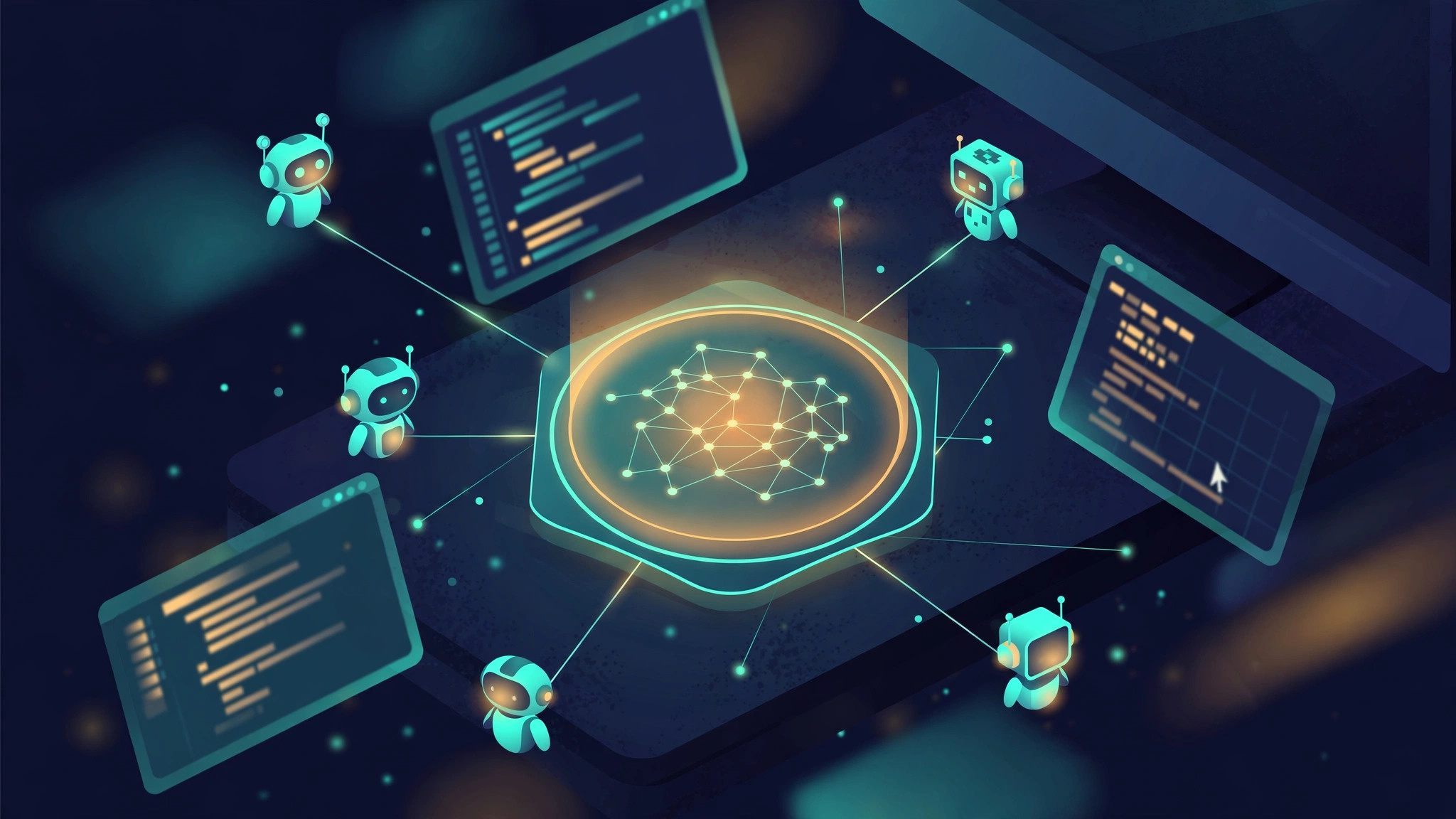
Picture the average AI-assisted developer's desktop in late 2026. Claude Code is open in one terminal, Codex CLI in another, maybe Pi in a third — each one a capable solo operator, each one with its own memory, its own conversation, and no idea the others exist. Ask one to review the other's work and you're copy-pasting between windows like it's 2009. Rovai AI, an open-source project out of China's developer community, exists to end that juggling act: instead of buying a bigger single agent, it gives your existing agents a shared room to work in.
The project — rovai-ai on GitHub — describes itself as a "desktop and web workspace for lasting teams of coding agents, with shared conversations, task delegation, and collaborative memory." It is MIT-licensed, in public development since July 2026, and its 0.5 release line, announced on China's LINUX DO forum in late October, is the version where the "team" idea stops being a slogan and starts being the product. The announcement thread, discussed on LINUX DO, highlights three headline additions: support for multiple agent teams, the ability to interrupt a teammate mid-execution, and a redesigned workbench interface.
To understand why anyone would want this, it helps to separate two things that get conflated in AI coding tools: the agent and the workspace. An agent — Claude Code, Codex CLI, Pi — is the loop that reads code, calls tools, and writes replies. A workspace is everything around that loop: who is working on what, what was agreed yesterday, which files changed, and who reviews the result. Most coding agents ship with almost no workspace at all. Their memory is a transcript file; their collaboration model is you.
That gap is exactly what Rovai fills. It does not write code itself. As its README puts it, "Rovai keeps the team's collaboration state and coordinates execution. The coding agents perform the work using their own tools, authentication, and configured model services." In other words, Rovai is the office, not the employee — it provides the shared conversation, the task board, and the institutional memory, while the agents you already installed and signed in to do the actual coding.
This distinction matters for cost, too. Rovai itself is free and open source, but it brings no model of its own. You supply your own agents and your own model access, so running costs are whatever those providers charge — which also means a team can mix a frontier model for architecture with a cheaper one for grunt work.
The 0.5 line has been shipping fast — the project reached v0.5.10 by November 8, 2026, with releases landing every few days. The headline features from the announcement thread map closely onto what the release notes show the project actually building:
Multiple agent teams. Earlier versions organized work around a single team per workspace. The 0.5 release lets you run several teams side by side — say, one team for the backend service and another for the docs site — each with its own teammates, conversations, and mission board. For solo developers this sounds like overkill until you realize a "team" here is closer to a persistent working group than to a headcount: a team is the unit that remembers things.
Interrupting a teammate mid-run. Long agent runs have a classic failure mode: you watch the agent head down the wrong path for ten minutes, unable to correct it without killing the process and losing the context. The 0.5 line adds the ability to send follow-up messages while a teammate is still executing, and the recent release notes describe exactly this behavior — supplemental messages no longer block on a pending confirmation, and cancelled executions can be inspected and manually resumed. It is a small interaction change with an outsized effect: steering replaces restarting.
A new workbench, called the execution desk. The redesigned interface centers on an "execution desk" (执行台) — a panel that shows what each teammate is doing right now, with the option to auto-expand it when you send a message or enter a conversation with an active run. Think of it as the difference between a chat log and a control room: the conversation tells you what was said, the desk tells you what is happening.
The 0.5.x line has also been adding steady polish — message export, Mermaid diagram rendering, longer role descriptions — the mark of a project listening to early users rather than chasing a roadmap.
Using Rovai starts with a concept its docs call a teammate. A teammate is not an agent; it is a role filled by an agent. You give the teammate a name, a role, responsibilities, and working principles, then choose which agent, model, and permissions back it. One teammate might be an implementer running Codex CLI, another a reviewer running Claude Code with read-only permissions. The identity sticks with the team across projects, so the reviewer stays the reviewer even when you switch repositories.
Work happens in shared conversations. You address specific teammates, they reply, and they can hand work to each other — the implementer finishes a change, the reviewer picks it up, and the handoff happens in the same thread instead of across your clipboard. Execution is visible throughout: tool activity, approval prompts, file previews, and diffs appear alongside the chat, so you can watch a change land instead of discovering it afterward.
Longer work lives on the Mission board. A mission is a goal you will return to — improving a download flow, preparing a release, working through a project review — with a project, a team, and an accumulated record of file changes and deliveries attached. Scheduled work and collaborative memory round out the picture: recurring tasks run on their own, and agreements the team reaches get saved for the next task instead of evaporating with the transcript.
Rovai does not bundle agents; it plugs into the ones you have installed, through native protocols and the Agent Client Protocol (ACP). The supported roster, per the project's README and release notes, is:
| Agent | What it brings |
|---|---|
| Claude Code | Anthropic's terminal agent; the most common reviewer pick |
| Codex CLI | OpenAI's terminal agent; the typical implementer |
| Pi Coding Agent | The open-source harness — see our Pi 1.0 explainer |
| DeepSeek Harness | DeepSeek's coding agent, for cost-sensitive teams |
| OpenCode | The open-source terminal agent with broad model support |
| Antigravity, CodeBuddy | Supported per recent release notes, with caveats |
Model choices, permissions, skills, and MCP support all depend on the agent behind each teammate — Rovai coordinates; it does not homogenize. That is the honest trade-off of the design: you get real diversity of models and tools, but you also inherit each agent's quirks.
The project ships as a desktop app for macOS (Apple Silicon and Intel) and Windows x64, plus a self-hosted Rovai Server with browser access for continuing work from another device. Downloads are at rovai.dev. If you would rather build it yourself, the requirements are Node.js 24+, Rust 1.85+, and pnpm:
git clone https://github.com/murray17/rovai-ai.git
cd rovai-ai
pnpm install --frozen-lockfile
pnpm dev
The quick start is deliberately small: install and sign in to one supported agent, check that Rovai sees it under Settings → Agents, create one teammate, and give it a small task — ask it to explain a project, then inspect the execution before assigning a real change.
One practical note: Rovai Desktop also connects to Feishu and DingTalk, so requests and results can flow through the messaging apps many Chinese teams already live in — a small detail that says a lot about where the project comes from.
Rovai is most compelling for a specific kind of user: someone who already runs two or more coding agents, works on projects that last longer than a single session, and feels the pain of context that lives only in transcripts. If you use one agent for one-off tasks, a team workspace is pure overhead — the value only appears when work has a yesterday and a tomorrow.
It is also, candidly, a young project. The repository was created in July 2026 and has around 250 stars and 52 releases as of this writing; the engineering guides are primarily in Chinese, and the English docs clearly serve a bilingual community first. That youth cuts both ways: the release cadence is fast and the maintainers respond to user reports quickly, but expect rough edges and breaking changes in a 0.x line. Try it on a side project before betting a production workflow on it.
For two years the coding-agent story has been about making one agent smarter — bigger context, better tools, longer runs. Rovai bets the next step is organizational, not cognitive: the bottleneck is no longer what a single agent can do, but how several agents divide work, remember decisions, and check each other. If you have ever wished your agents could just talk to each other instead of through you, this is the most direct attempt at that idea currently shipping as open source. The 0.5 release doesn't settle the bet, but it finally gives you a workbench to test it on — start small, with one teammate, one task, and a close eye on the execution desk.